

The headlines appearing across major media outlets are designed to startle: over 200 reported deaths and more than 158,000 adverse reaction reports in the UK linked to GLP-1 receptor agonists—a class of weight-loss drugs including Ozempic, Wegovy, Mounjaro, and Saxenda. For anyone taking these medications, considering them, or simply watching the rapid shift in metabolic medicine, those numbers naturally raise a single question: is this safe?
To answer that, we have to look past the dramatic headlines and examine what the UK Medicines and Healthcare products Regulatory Agency (MHRA) Yellow Card data actually tells us—and what it does not.
Where This Data Actually Comes From
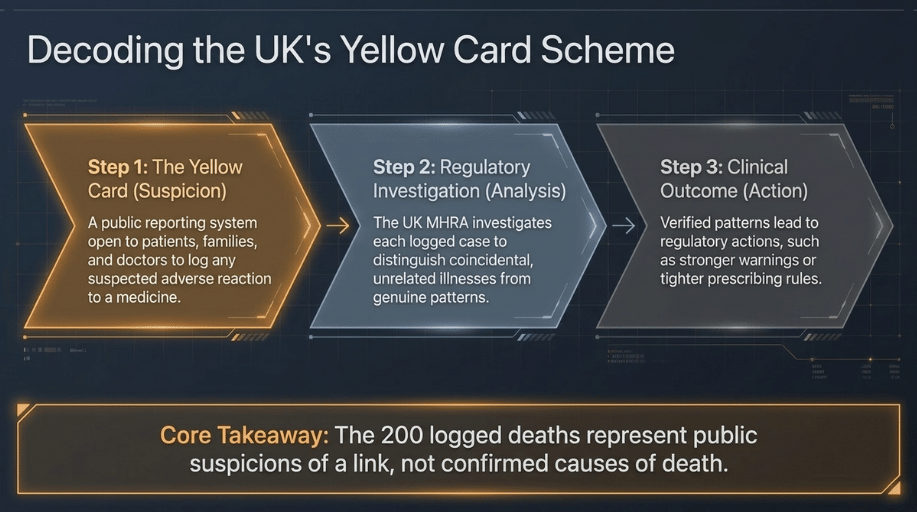
First: Yellow Card reports are not proof of direct causation. The UK’s Yellow Card scheme is a passive pharmacovigilance system—a nation-wide reporting mechanism where healthcare professionals, patients, and families log any health event that occurs while or after taking a medication. If an individual taking a GLP-1 drug experiences a cardiovascular event, severe acute pancreatitis, or dies from any cause, that event can be submitted as a “suspected adverse reaction.” It is a system built to gather smoke signals, not to deliver instant verdicts.
Crucially, 200 reported deaths over a multi-year period across a population of hundreds of thousands of users does not mean the drug caused 200 deaths. Many patients prescribed GLP-1 drugs carry baseline metabolic risks—including type 2 diabetes, severe obesity, hypertension, and cardiovascular disease—that independently elevate mortality risks. Distinguishing between coincidental health events and drug-induced complications is precisely why regulatory investigations take time.
Why This Is Genuinely Concerning — Not Just Alarmist

First, the scale. Over 158,000 adverse reaction reports logged across tirzepatide, semaglutide, and liraglutide is a substantial volume of data. While many logged events represent expected gastrointestinal side effects—nausea, vomiting, diarrhea, and severe constipation—the sheer volume demands rigorous analytical oversight.
Related Reading
Why Do Ozempic And Mounjaro Cause Nausea?An in-depth look into the documented gastrointestinal side effects driving these safety reports.
Second, the trajectory. The rapid doubling of reported deaths—from 82 earlier in the reporting window to over 200 in recent MHRA updates—reflects the exponential surge in prescriptions across the UK. As usage expands from high-risk clinical populations into broader lifestyle and cosmetic markets, rare adverse signals naturally become more visible.
Third, specific complications. The MHRA has flagged over 560 reports of pancreatitis, including at least 10 fatal outcomes tied specifically to pancreatic inflammation. This isn’t statistical noise; it represents a recognized physiological risk factor that requires strict clinical screening and patient monitoring.
Why This Is Where Fasting Enters The Conversation
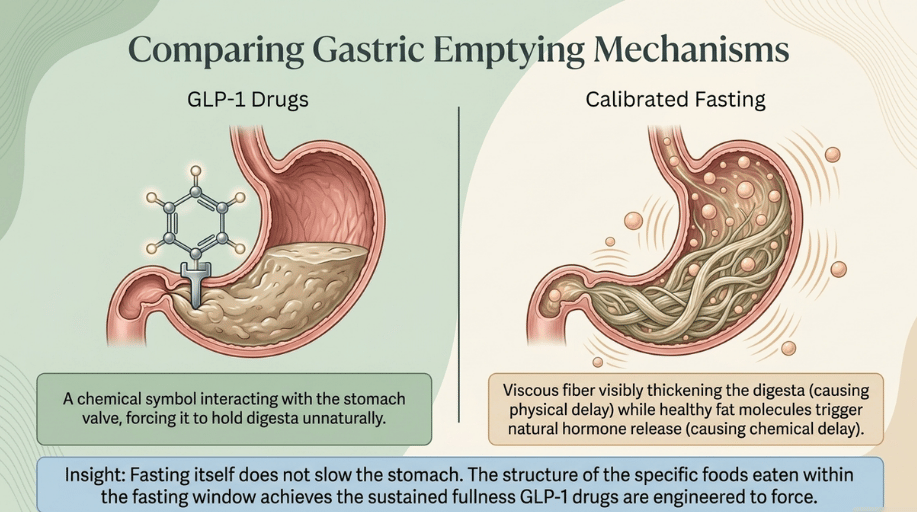
First, GLP-1 drugs work partly by slowing down gastric emptying—forcing food to sit in the stomach longer to prolong physical fullness. But this same mechanism, when chemically forced, can lead to gastroparesis (stomach paralysis), severe reflux, and bowel obstruction. Calibrated intermittent fasting, paired with dietary viscous fiber and healthy fats, triggers the same delayed gastric emptying through natural mechanics—without overriding your autonomic nervous system.
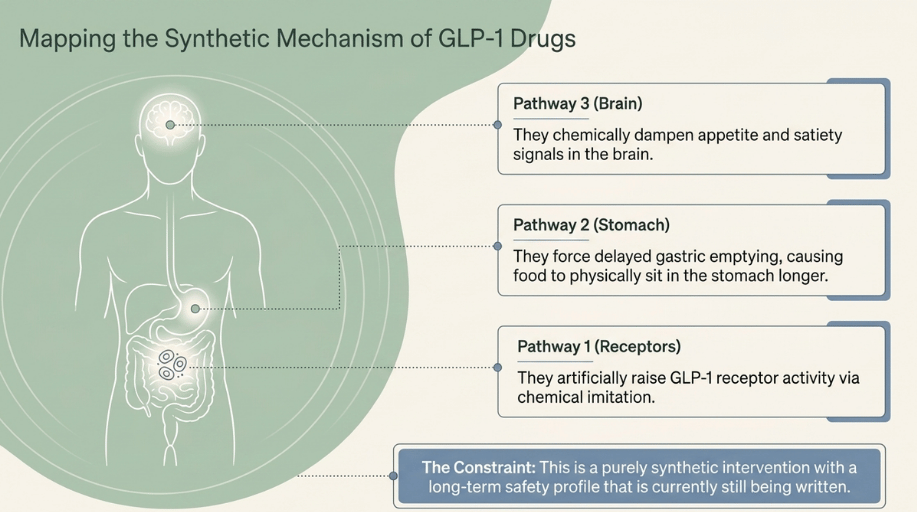
Second, and perhaps most fundamentally, fasting engages endogenous GLP-1 secretion alongside a orchestrating cascade of complementary satiety hormones (including PYY and CCK). Injected GLP-1 analogues deliver a massive, constant level of synthetic stimulation that bypasses the body’s natural feedback loops. Calibrated fasting respects those physiological feedback mechanisms, producing natural hormone pulses during eating windows while allowing receptor recovery during fasting periods.
The Discernment This Moment Actually Calls For
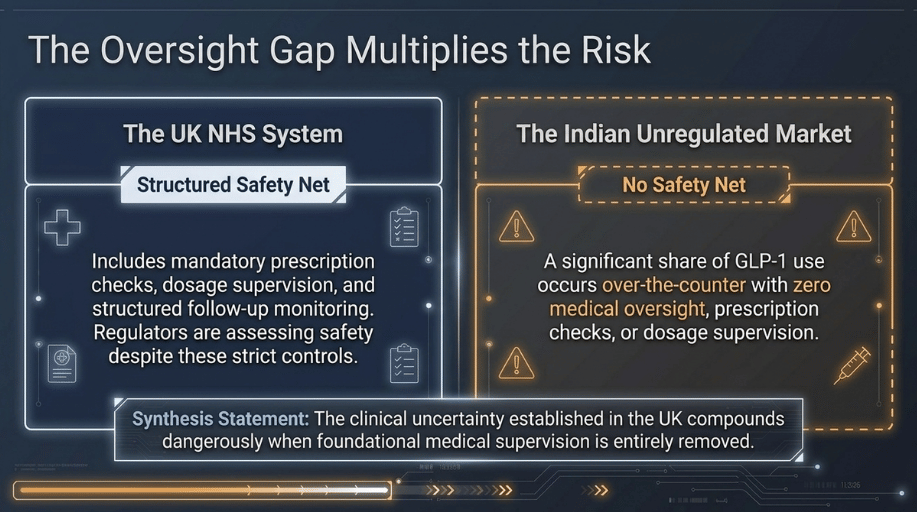
This moment does not demand panic. It demands discernment. For individuals with severe, treatment-resistant obesity or advanced metabolic disease, GLP-1 medications under strict clinical oversight remain a valid medical tool. But for the millions seeking sustainable weight loss, natural metabolic health, and freedom from lifelong pharmaceutical dependence, the growing safety signals serve as an important reminder: short-circuiting biological systems carries real trade-offs.
By understanding how the body naturally produces GLP-1 through calibrated fasting, meal timing, and nutrient density, you can harness your own evolutionary biology to achieve sustainable metabolic balance safely.
Related Reading
Can GLP-1 Replace Discipline? Buddha’s Fasting LessonExploring what gets outsourced when a chemical molecule manages appetite instead of biological self-regulation.