
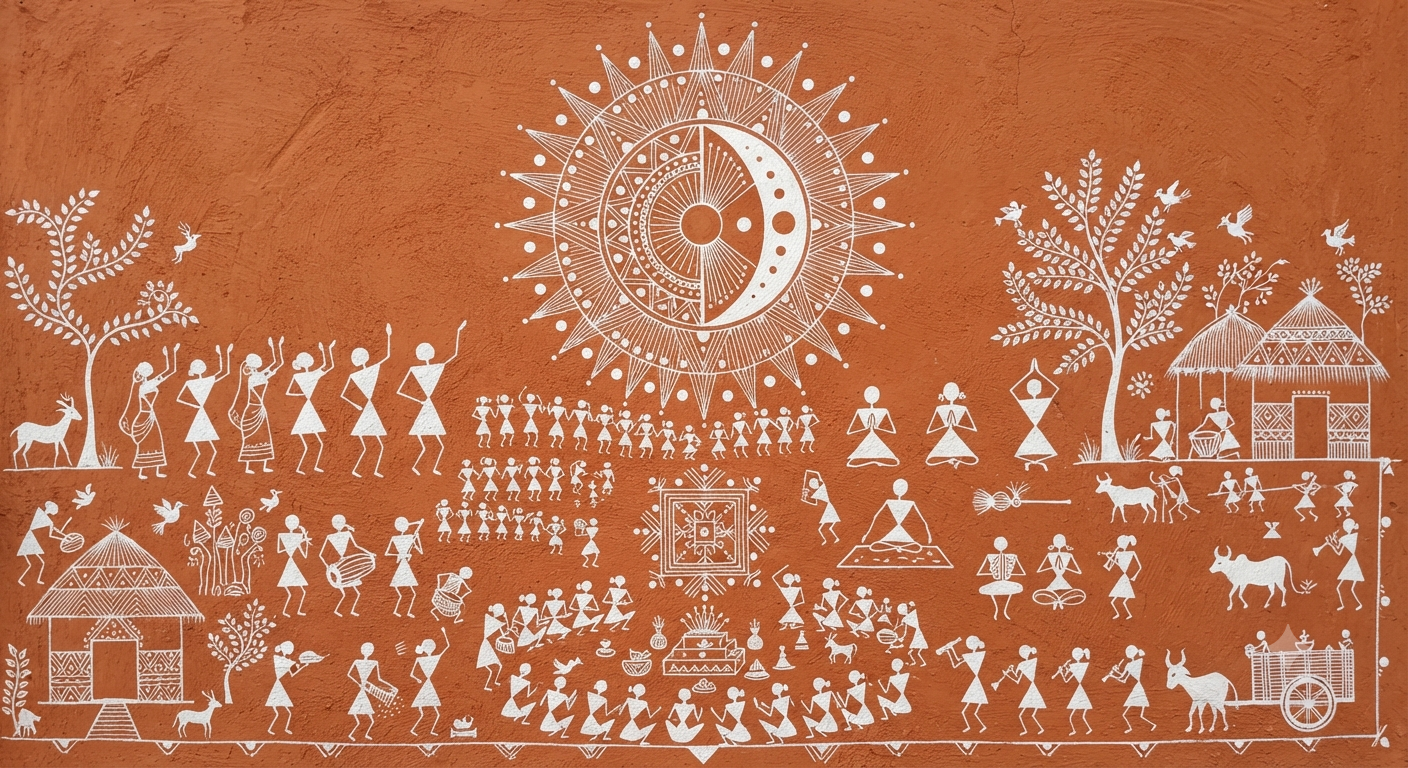
India: The Global Capital of Fasting
Ten traditions. One timeless practice.
Walk into any kitchen in India during a festival season, and you'll notice something strange: the stove is often quieter than usual, not busier. A fast is underway. Somewhere in that home, someone hasn't eaten since sunrise, or won't eat until moonrise, or is sipping only fruit juice until the next morning's first light.
Now walk into another home, a few kilometres away, observing a completely different fast — different rules, different timing, different reason entirely. That's the part most people outside India never quite grasp: fasting here was never one practice. It's dozens of them, layered over centuries, each with its own internal logic.
Modern Fasting, For Context
Before we get to India's traditions, it's worth grounding this in language most readers already know. The modern wellness world has its own vocabulary for fasting:
- 16:8 Method — fast 16 hours, eat within an 8-hour window
- 12:12 Method — a gentler 12-hour fast, mostly overlapping with sleep
- 5:2 Diet — eat normally five days, restrict to ~500-600 calories on two non-consecutive days
- Alternate-Day Fasting — alternate full-eating days with fasting or very-low-calorie days
- Eat Stop Eat — one or two full 24-hour fasts per week
- One Meal a Day (OMAD) — 23 hours fasted, one meal in a 1-hour window
- Fast-Mimicking Diet — five days of low-calorie, plant-based eating designed to simulate a fasted state
These are useful, well-studied frameworks. But they're also, in a sense, recent inventions — formalised in the last few decades. What follows predates all of them, in some cases by thousands of years.
A Note Before We Continue
India is not the only culture with deep fasting roots — Ramzan/Roza is observed by over a billion Muslims worldwide, Lent has shaped Christian practice for two millennia, Yom Kippur is central to Jewish tradition. We say this with real respect, not as a formality. Our claim isn't that India invented fasting, or practices it "better." It's narrower and, we believe, easy to defend: nowhere else does one country hold as many structurally distinct fasting traditions, observed simultaneously, across so many communities, each with its own timing, its own rules, its own reasoning.
Ten Fasting Traditions of India
| Fast | Observed By | Core Rule | How It Breaks |
|---|---|---|---|
| Navratri Vrat | Hindu | Grain-free, satvik food, often once daily | Ninth/tenth day, post-puja |
| Karwa Chauth | Hindu (North India) | Nirjala (no food or water) sunrise to moonrise | On sighting the moon |
| Ekadashi | Hindu, Jain | No grains/legumes; some observe nirjala | Next morning (Dwadashi) |
| Maha Shivratri | Hindu | Full-day fast, often nirjala, night-long vigil | Next morning |
| Sankashti Chaturthi | Hindu | No grains until moonrise | On sighting the moon |
| Ramzan (Roza) | Muslim | No food or water, pre-dawn to sunset | Iftar, at sunset |
| Paryushan (Ayambil/Upvas) | Jain | Ranges from one bland meal daily to full water-only fasts | Varies by observance level |
| Sawan Somvar | Hindu | Often fruit/milk-only, once daily | Evening meal |
| Chhath Puja | Hindu (Bihar/UP) | 36-hour nirjala fast | After sunrise offering, day two |
| Lent (Indian Christian communities) | Christian | Abstinence from specific foods, 40 days | Easter |
Not One Fast — Many Different Structures
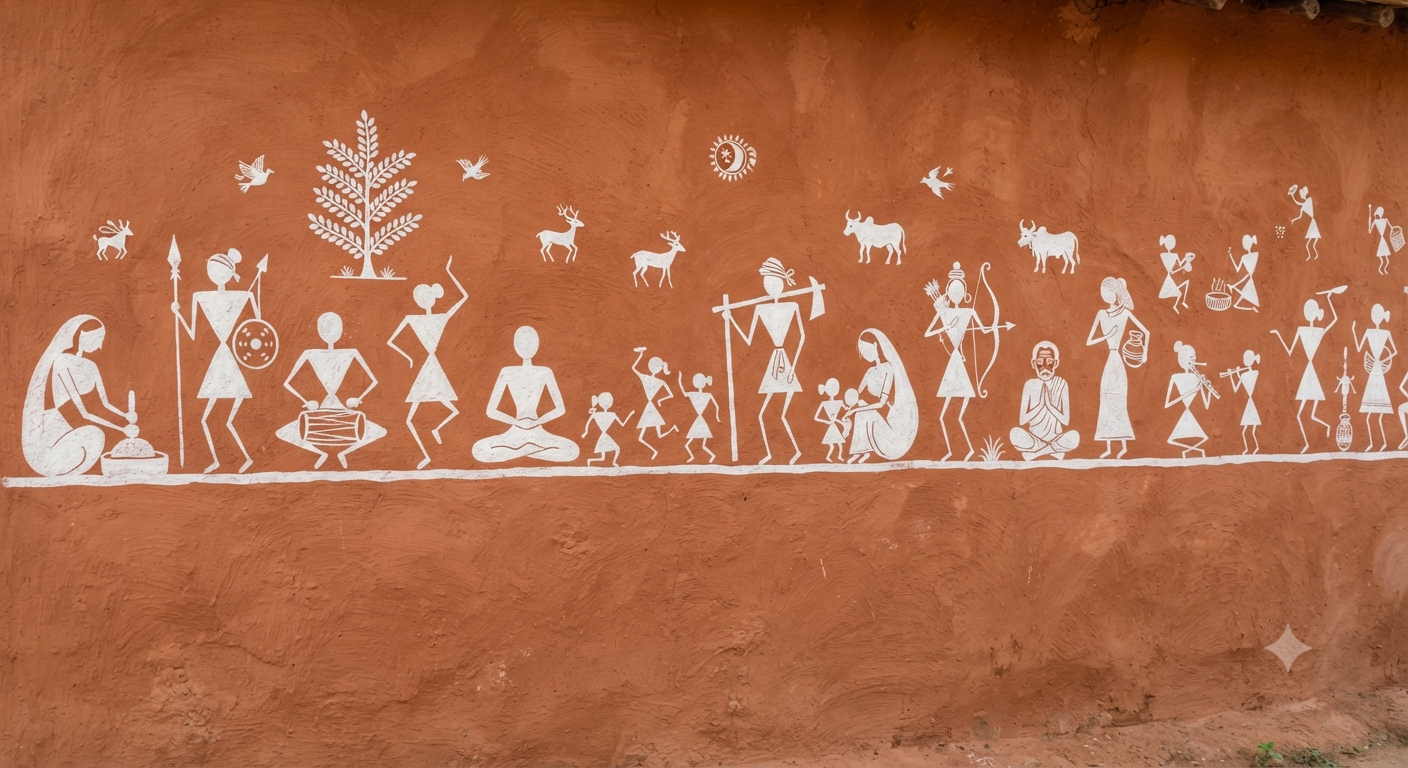
What makes this list interesting isn't the length. It's the variation. Some fasts, like Karwa Chauth or Chhath, are nirjala — no water at all, which places them among the most physically demanding fasting protocols observed anywhere in the world. Others, like Navratri, permit specific foods throughout the day, making them closer to an elimination diet than a true fast.
Some break at a fixed clock time; others break only when the moon becomes visible, which shifts the fasting window by hours depending on the date and the sky. Some are observed once a year; others, like Ekadashi or Sawan Somvar, recur on a fixed cycle throughout the year.
Line them up, and you have something close to a complete library of fasting structures — time-restricted, alternate-day, full 24-hour, multi-day, and everything between — independently developed, centuries before "intermittent fasting" became a term.
Fasting and the Spiritual Traditions of India
Long before fasting had a wellness industry, it had teachers. The Buddha, after years of severe self-denial, arrived at what he called the Middle Way — neither starvation nor indulgence, but balance. Mahavir Jain built fasting into the very architecture of Jain spiritual practice, still visible today in Paryushan. Mahatma Gandhi used fasting as a tool of discipline and protest, treating it as something the mind does through the body. Vivekananda spoke of restraint — sanyam (संयम) — as a path to clarity, not punishment.
None of these figures were making a medical claim. They were describing fasting as a practice of will, attention, and restraint. That distinction matters, because it's closer to what we believe than any claim about biology: fasting, done right, is less about deprivation and more about discipline, intentionally applied.
From Tradition to Protocol
India didn't need modern nutrition science to discover that fasting works in different ways for different bodies, at different intensities, for different durations. That understanding was already encoded quietly, informally, generationally into festival calendars and family customs.
The Calibrated Fasting Protocol (CFP) doesn't claim to have invented any of this. What it does is take that same underlying principle — that fasting should be matched to the person, not applied identically to everyone — and pair it with modern monitoring, structured pacing, and medical calibration. Centuries of inherited wisdom, adjusted for one body at a time.
Frequently Asked Questions
What are the different types of fasting?
Broadly: time-restricted (16:8, 12:12), periodic calorie restriction (5:2), full-day fasts (24-hour, alternate-day), and multi-day protocols (fast-mimicking diets). India's traditional fasts span nearly all of these categories independently.
What is the healthiest type of fasting?
There's no single "healthiest" fast — it depends on the individual's health status, goals, and how the fast is calibrated. This is precisely why a one-size protocol (whether a religious fast or a generic 16:8 plan) can work well for one person and poorly for another.
What is the correct way to fast?
Gradual entry, adequate hydration (except in nirjala/water-free fasts, which need medical caution), attention to electrolytes, and a pace matched to the individual — not a fixed rule applied identically to everyone.
Can I exercise while fasting?
Light to moderate activity is generally fine for most people during time-restricted fasting; intensity should be reduced during extended or nirjala fasts. Always calibrated to the individual, not assumed.
What should I drink during fasting?
Water, black coffee, and plain tea are typically acceptable during non-nirjala fasts. Nirjala fasts (like Karwa Chauth or Chhath) restrict water entirely and warrant extra caution, especially for anyone with existing health conditions.
What is water fasting?
A fast in which only water is consumed — no food, no other beverages. Several Indian traditions (parts of Ekadashi, Chhath, Karwa Chauth) fall into or near this category, some for 24-36 hours.
Can fasting help reduce belly fat?
Fasting can support fat loss as part of an overall calorie deficit, but results vary by individual, and no fasting method — traditional or modern — should be treated as a guaranteed or rapid fix.
Now... in case you have never done any fasting ever before, I invite you to think about your fasting journey. And for that I ask you to take these two small steps, which will together help you overcome 100% of your fasting journey within next 1 minute.
Step I: Download the free eBook Fast Without Fear [No sign-up required]
Step II: Claim your personalized poster via WhatsApp — and yes... while you’re chatting with me, you may ask me any question about your first fast.
You need both of these resources to make your fasting experience a breeze.
Cover the First 50% of your Fasting Journey:
Cover the Remaining 50% of your Fasting Journey:
Together these two resources will guide you through a very gentle process lasting 5 weeks. And as soon as you employ these two resources, your fear of fast will be a thing of past.
And here is the good thing: while you are trying to do some fasting in order to lose weight, you will automatically get these three bonuses: